Higher energy costs, recurring equipment failures, moisture problems, and unexplained system performance issues are not always easy to diagnose.
Central Air Equipment provides advanced testing and diagnostic services that help you understand how your compressed air systems and equipment are actually operating. By collecting and interpreting real operating data, our technicians can help identify developing problems, verify performance, and recommend the right next steps.
Leaks, inefficient compressor operation, unstable pressure, and unnecessary runtime can raise energy costs without improving production. These services help identify where compressed air and electricity are being wasted and where system performance can be improved.
A compressed air audit evaluates how air is generated, stored, distributed, and used throughout your facility. Depending on the scope, the audit may include airflow, pressure, electrical consumption, compressor sequencing, storage, and system-demand data.
The findings can help identify opportunities to reduce energy use, improve pressure stability, optimize compressor operation, and determine whether the system can support current or future production requirements.
Ultrasonic leak detection uses specialized equipment to locate compressed air leaks that may be difficult to find in an operating facility.
Leaks can create unnecessary compressor demand, increase energy consumption, and reduce the amount of available air reaching production. A leak survey helps your team locate losses, prioritize repairs, and establish a more effective leak-management program.
Ultrasonic leak detection can be performed as a standalone service or incorporated into a broader compressed air audit.
Electrical data logging records equipment power consumption and operating patterns over an extended period rather than relying on a single reading.
Depending on the application, data may include voltage, current, power consumption, peak demand, starts and stops, and equipment-loading patterns. When combined with compressor, pressure, and airflow data, electrical logging can help reveal inefficient sequencing, excessive unloaded runtime, and other sources of unnecessary energy use.
Abnormal vibration, excessive heat, lubricant problems, and shaft misalignment can shorten the life of bearings, seals, couplings, motors, and other rotating components.
These services help identify developing equipment problems before they result in a more disruptive failure.
Vibration analysis measures how rotating equipment behaves while operating. The collected data can help identify patterns associated with imbalance, misalignment, looseness, bearing wear, coupling problems, resonance, and other mechanical concerns.
Testing may be performed to investigate a specific problem, establish an equipment baseline, or monitor changes over time. Trending vibration levels can help maintenance teams recognize deterioration and plan corrective work before equipment fails unexpectedly.
Thermal imaging uses an infrared camera to identify unusual temperature patterns in operating electrical and mechanical equipment.
The inspection may reveal overheating electrical connections, uneven loading, excessive friction, cooling problems, or components operating differently from comparable equipment. Thermal imaging is non-contact, allowing many inspections to be completed without shutting down the equipment.
The findings can help your team identify areas that require further investigation and prioritize maintenance based on observed equipment conditions.
Oil analysis evaluates both the condition of the lubricant and indicators of internal equipment health.
Depending on the testing performed, an oil sample may be checked for wear metals, water, contamination, viscosity changes, oxidation, additive depletion, and other signs of lubricant or equipment deterioration.
Oil analysis can help identify abnormal wear, contamination, or oil breakdown without dismantling the equipment. Recurring sampling provides additional value by allowing results to be trended over time.
Laser shaft alignment measures and corrects the position of two coupled machines, such as a motor and pump, motor and compressor, or engine and driven component.
Misalignment can contribute to excessive vibration, premature bearing and seal wear, coupling damage, heat generation, and repeat mechanical repairs. Laser equipment calculates the adjustments needed to bring the shafts within the appropriate alignment tolerance.
Alignment may be completed during equipment installation, following a motor or component replacement, or when vibration and repeat failures indicate a possible alignment problem.
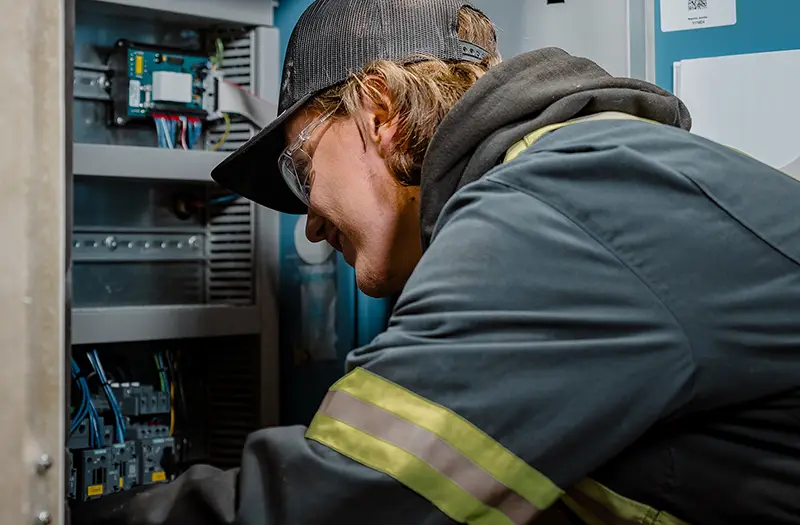
Compressed air and generated nitrogen must meet the requirements of the equipment and processes they support. Excess moisture or incorrect nitrogen purity can affect equipment reliability, product quality, and overall process performance.
These services help verify whether your compressed air or nitrogen supply is meeting the required conditions.
Dew point testing measures the amount of moisture present in compressed air.
Even when liquid water is not visible, excessive moisture can contribute to corrosion, pneumatic equipment problems, process contamination, freezing, and product-quality concerns. Testing can help verify dryer performance and determine whether compressed air is dry enough for the application.
Measurements may be taken near the dryer discharge or at critical points of use to help identify where moisture problems are occurring within the system.
Nitrogen purity analysis verifies whether an on-site nitrogen generator or nitrogen supply is delivering gas at the purity required by the process.
Purity that is too low may affect process performance or product quality. Producing nitrogen at a purity significantly higher than required may also increase compressed air and energy consumption.
Testing can help verify generator output, confirm purity at the point of use, troubleshoot fluctuations, and determine whether the system is operating at an appropriate purity setting.
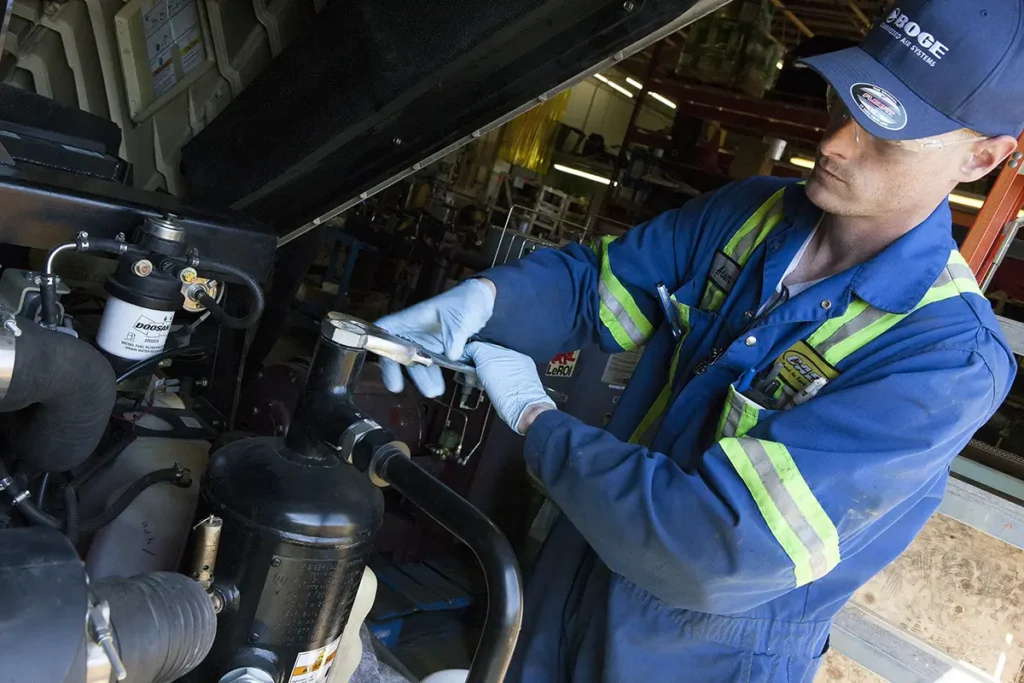
Modern diesel-powered compressors and other engine-driven equipment depend on electronic controls, sensors, and emissions systems. When a warning, derate, or shutdown occurs, diagnostic access can help identify the source more efficiently.
On-board compressed air systems give service trucks and work vehicles the air needed to operate tools and equipment in the field. When the compressor goes down, the truck may no longer be able to do the job it was built for.
CAE provides service and repair for a range of vehicle-mounted compressor systems, helping keep work trucks productive and compressed air available where it is needed.
Tow-Behind Diesel Air Compressors
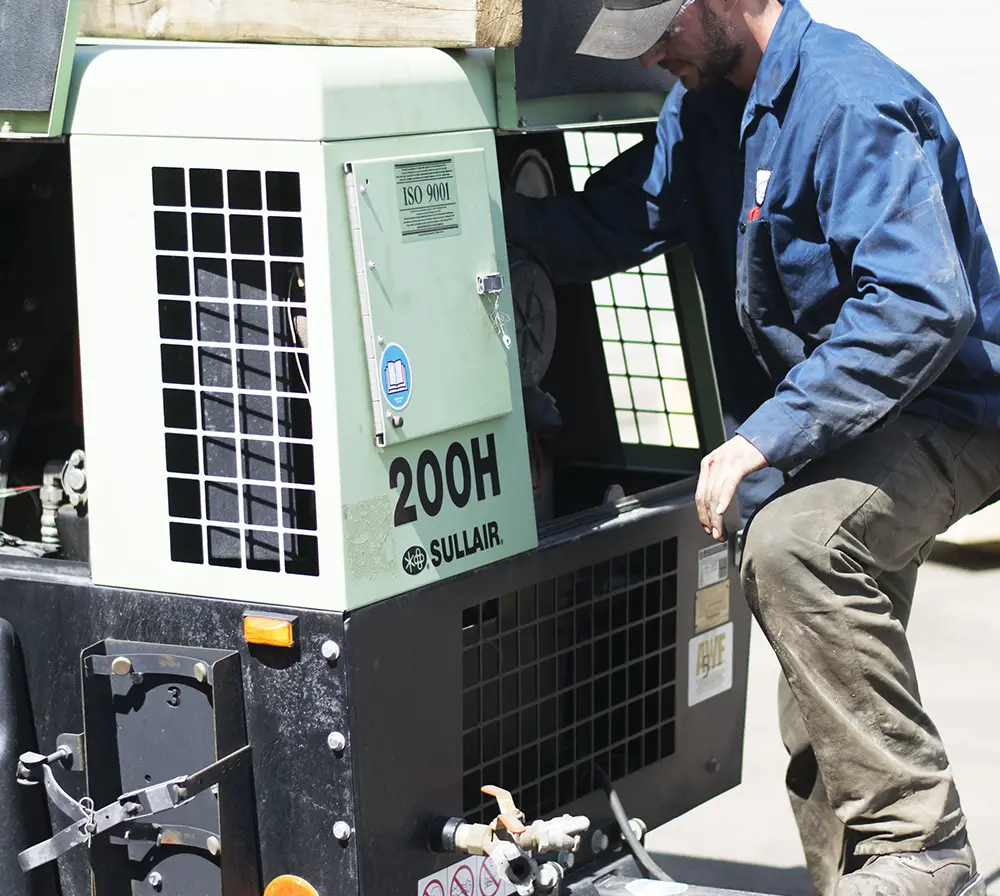
CAE services and repairs tow-behind diesel air compressors used for construction, utility, rental, and field applications.
UNDERHOOD Compressors
Vehicle-integrated systems installed in the engine compartment and powered by the truck.
PTO-Driven Compressors
Systems that use the vehicle’s engine and transmission to power the compressor.
Underdeck Compressors
Compressors mounted beneath the truck body to preserve valuable deck space.
Above-Deck Compressors
Truck-mounted compressor packages installed on the vehicle deck.
CAE sells and services VMAC UNDERHOOD rotary screw air compressors for service trucks and commercial vans. These vehicle-integrated systems mount in the engine compartment and use the vehicle engine to provide continuous compressed air without taking up valuable truck deck or cargo space.
VMAC UNDERHOOD systems are available in configurations ranging from 40 CFM to 110 CFM, supporting applications from tire service and equipment repair to utility, municipal, construction, and other mobile service work.
CAE can help you select the right VMAC system for your vehicle and air requirements, along with ongoing maintenance, troubleshooting, and repair. Our expanded shop capabilities, including a truck hoist, allow our technicians to access and service vehicle-integrated compressor systems more effectively.
Collecting data is only useful when the findings are clearly explained.
Depending on the service and agreed scope, your results may include:
Before testing begins, our team will review the scope and expected deliverables so you understand what information will be provided.
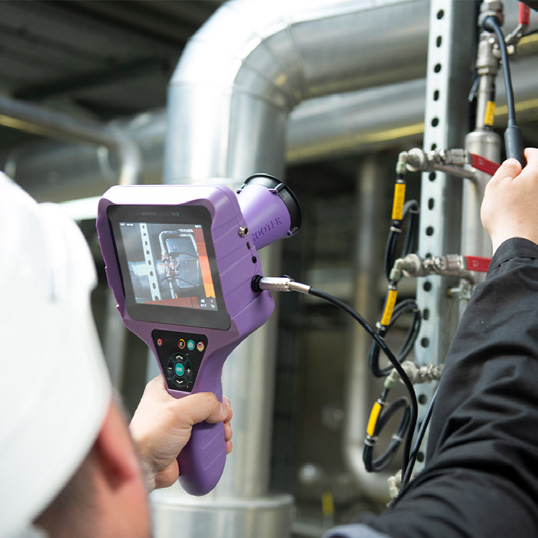
Our team can help investigate compressed air performance, equipment condition, air and gas quality, and diesel engine concerns without requiring you to coordinate several unrelated providers.
Testing provides information about how your equipment and systems are performing under real operating conditions, helping reduce guesswork and unnecessary parts replacement.
When a problem is identified, our service team can help you determine the appropriate corrective action and support the equipment or system work that follows.
Not every concern requires a complete audit or an ongoing monitoring program. We help determine which service and testing scope are appropriate for the issue, equipment, and operational risk.
Many services are performed while equipment is operating under normal or representative conditions. These may include thermal imaging, vibration testing, ultrasonic leak detection, electrical data logging, and certain air and gas quality tests.
Laser alignment and some equipment inspections may require a shutdown. Our team will review the service requirements before the work is scheduled.
Deliverables vary based on the service and scope. They may include test readings, identified problem areas, images, leak locations, laboratory results, trend data, alignment measurements, equipment observations, and recommended next steps.
Coverage varies by service, equipment type, manufacturer, model, and available diagnostic access. Contact Central Air Equipment with your equipment information so we can confirm the appropriate testing and service capabilities.
We use cookies to improve your experience, analyze traffic, and support marketing. You can accept all, reject non-essential cookies, or customize your choices.
California users can reject marketing cookies to opt out of sale/share or targeted advertising.